Children's dentistry in Palakollu
First visits that do not frighten anyone, milk-tooth treatment, sealants and habit appliances.
A child should see a dentist by their first birthday, or within six months of the first tooth appearing, long before anything hurts. Early visits are short, friendly and mostly about counting teeth and getting comfortable in the chair. At Care Dental Experts in Palakollu we treat milk-tooth decay, place sealants and fluoride, and manage thumb-sucking and tongue-thrust habits.
"They are only milk teeth", why that is wrong
It is the commonest thing we hear, and it is understandable. But milk teeth hold the space for the permanent teeth arriving underneath. Lose one early to decay and the neighbouring teeth drift into the gap, so the permanent tooth erupts crooked or gets blocked out entirely, and you pay for braces later that you might not have needed.
Decay in a milk tooth also causes the same pain, the same infection and the same sleepless nights as decay in an adult tooth. An abscessed milk tooth can damage the developing permanent tooth right beneath it.
What we do for children
| Treatment | What it is for | Typical age |
|---|---|---|
| First visit and counting | Familiarisation, checking eruption, advice for parents | From 1 year |
| Fluoride varnish | Strengthening enamel against decay | From 2 years |
| Fissure sealants | Sealing the deep grooves of new permanent molars | 6 to 8 and 11 to 13 years |
| Milk tooth fillings | Treating decay before it reaches the nerve | Any |
| Pulpectomy (baby root canal) | Saving a badly decayed milk tooth that still has a job to do | Any |
| Space maintainer | Holding the gap when a milk tooth is lost too early | 4 to 10 years |
| Habit-breaking appliance | Thumb-sucking or tongue-thrust past age 5 to 6 | 5+ years |
| Sports mouth guard | Protecting front teeth during school sport | 7+ years |
How to prepare a nervous child
Book a morning appointment
Children cope far better before they are tired.
Watch your own words
Do not say "it won't hurt", "no injection" or "don't be scared", the child hears the frightening word and nothing else. Say you are going to have your teeth counted.
Do not promise what you cannot control
If you promise nothing will be done and something needs doing, you lose their trust and so do we.
Do not share your own fear
If dentists frighten you, send the calmer parent. Children read anxiety instantly.
Let us do the explaining
We use "sleepy juice", "tooth shower" and "the counting mirror" rather than clinical words. Sit close by and let us lead.
Reward the visit, not the behaviour
Praise them for coming, not for being brave about something painful.
Preventing decay in the first place
- Never put a baby to bed with a bottle of milk or juice. Milk pooling around the front teeth overnight causes severe early childhood decay.
- Brush from the very first tooth, with a smear of fluoride toothpaste.
- Brush for your child until about age seven. Their hands cannot do it properly before then, however capable they seem.
- Limit sweets to mealtimes. Frequency causes decay more than quantity, one sweet after lunch is kinder to teeth than the same sweet spread across an afternoon.
- Water between meals, not juice or soft drinks.
- Sealants on new permanent molars, as soon as they are through.
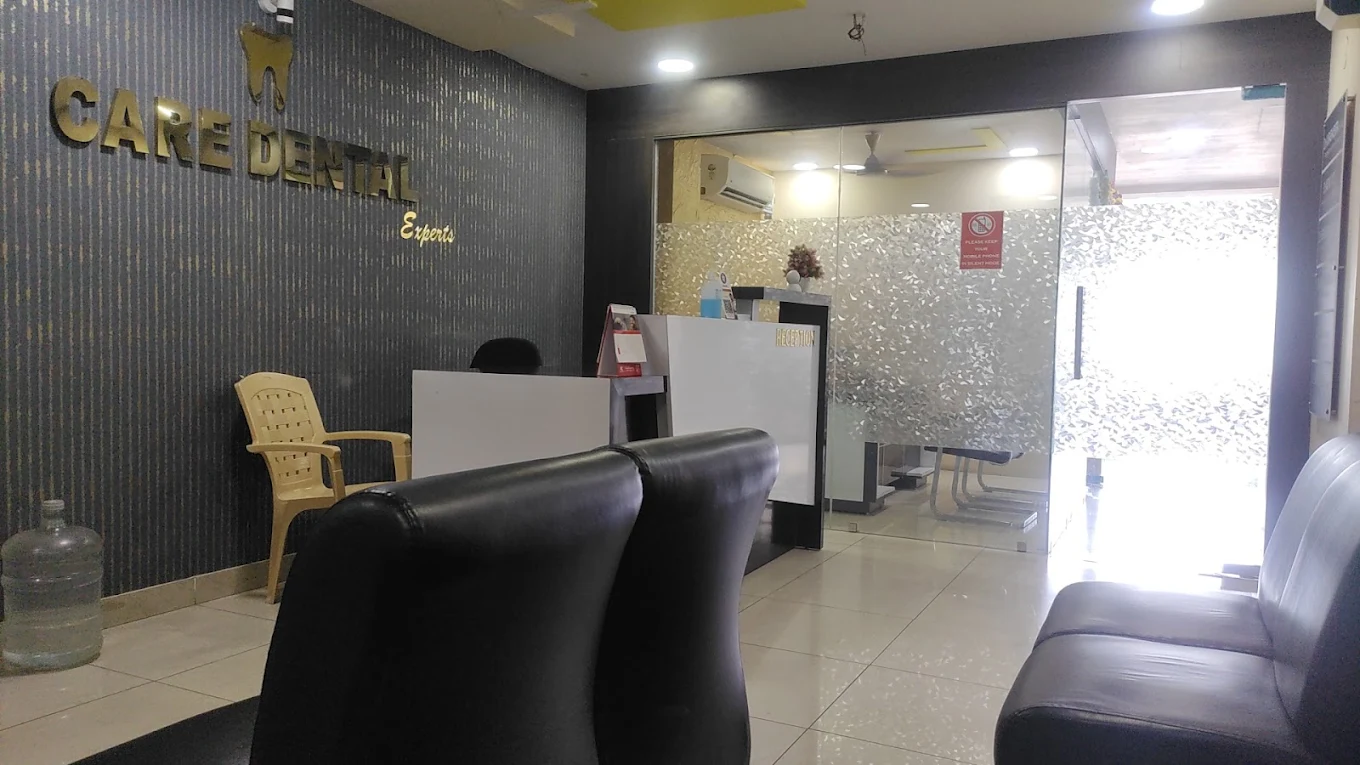
We are empanelled under the Employees Health Scheme (EHS) and the Working Journalists Health Scheme (WJHS). There is an Aarogya Mithra help desk inside our waiting room. Bring these:
- EHS / WJHS health card of the employee, pensioner or journalist
- Aadhaar of the patient
- Employee or pensioner ID, and proof of relationship for a dependent
Common questions
At what age should my child first see a dentist?
By the first birthday, or within six months of the first tooth appearing. That first visit is short and involves no treatment. It builds familiarity, and it lets us spot early problems and advise you on brushing and feeding.
My child has a cavity in a milk tooth. Can we just wait for it to fall out?
Usually not. Back milk teeth are not lost until around age 10 to 12, so an untreated cavity at age six has years to become an abscess. Whether to fill or extract depends on how far the decay has gone and how close the tooth is to falling out naturally, the X-ray decides.
How do I stop thumb-sucking?
Before age four or five, most children stop on their own and it does little lasting harm. Beyond that it can push the front teeth forward and change the bite. Start with gentle reminders and reward charts; if the habit persists, a simple habit-breaking appliance fitted behind the teeth is very effective.
Is dental X-ray safe for children?
Yes, in the small doses used, with a lead apron and thyroid collar, and only when the image will change a treatment decision. We do not take routine X-rays on children just because they have come in.
Not sure which treatment you need?
Bring your X-rays if you have them, or just bring the tooth that is troubling you. A consultation and examination is the honest first step. We will tell you if you do not need treatment yet.